
Cart
0
£0.00
Today's dominant waterproofing solutions bituminous membranes, liquid membranes, resin-based coatings do one thing extremely well: they seal the surface. But they do not solve the root cause of the moisture. The water trapped inside the wall stays there. The surface improves temporarily, the system passes the short-term test, and then, 12–24 months later, the problem frequently reappears.

15 years in the construction industry, 40+ projects — and one lesson it's finally time to say out loud.
The industry profits from recurring faults, not permanent solutions.
Surface sealing only postpones the problem — it does not eliminate it.
A wet structure cannot support lasting energy efficiency or durability.
My grandmother's house still stands in a small village on the Hungarian Plain. The damp patch is still there on the wall — in exactly the same place it was forty years ago. Unlike the neighbouring house, where every attempt has failed: the problem has crept steadily higher, year after year.
For forty years they have been playing the same film on repeat: they inject the walls all around, saw out the plinth, apply fresh plaster, and finish it off with the latest "miracle" coating.
And for a while, it really seems so.
Then the vicious circle begins again: the patch reappears. The paint blisters. The plaster peels. The saltpetre blooms. The moisture resurfaces — higher than before. Because the neighbours are not buying a solution. They are buying time. Again and again, they pay for postponement.
And almost no one ever asks the simplest question: WHY?
You can't fool moisture — if it stays trapped in the wall, it will always find its way out.
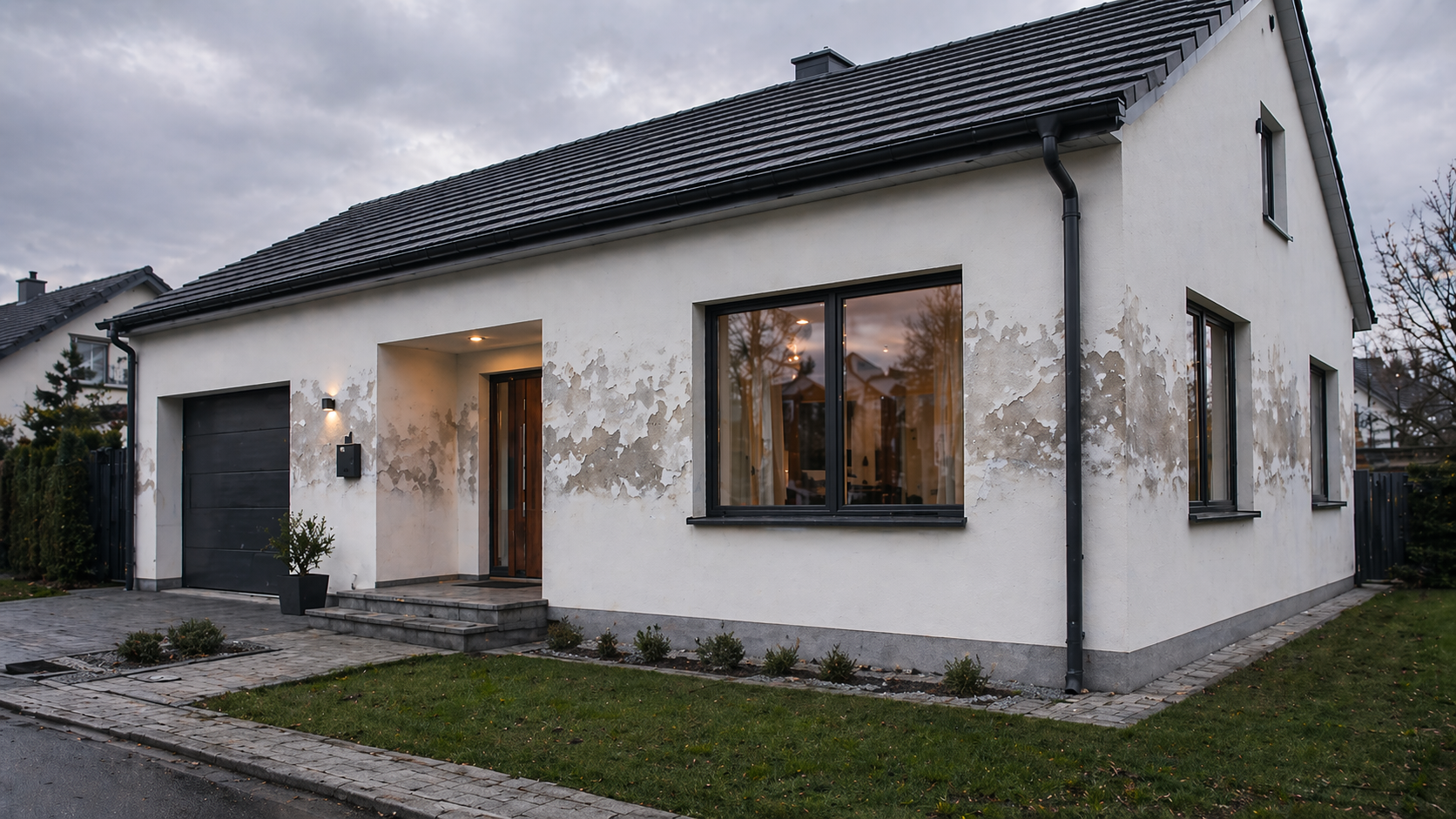
One of the biggest businesses in the construction industry is often not the solution itself — BUT THE REPETITION.
Today's dominant waterproofing solutions — bituminous membranes, liquid membranes, resin-based coatings — do one thing extremely well: they seal the surface. But they do not solve the root cause of the moisture. The water trapped inside the wall stays there. The surface improves temporarily, the system passes the short-term test, and then, 12–24 months later, the problem frequently reappears.
Because if the moisture remains trapped inside the wall or the structure, the surface may look nice for a while — but the problem itself has not disappeared. It has simply been postponed.
The industry may call this a "maintenance cycle".
One of the biggest businesses is often not the permanent solution, but the repetition of the problem. As long as a significant part of the industry is built not on eliminating the root cause, but on managing recurring faults, the issue will never truly go away — it will only keep generating revenue again and again.
The real question, therefore, is not what we will use to cover up the fault next time, but why we have accepted as normal that the same problem returns every 2–3 years.
The future does not belong to symptom treatment. It belongs to solutions that address the root of the problem.
Manufacturers want profit. Retailers want turnover. Shops and builders' merchants push the products that sell in volume, sell quickly and keep selling again and again.
This is not surprising in itself.
The problem is the consequence: the market is flooded with materials that only treat the symptoms, while genuine structural solutions are pushed into the background.
The shelves are lined with every kind of waterproofer, coating, membrane, injection system, repair plaster and "special" solution. Each one promises something. Each one can generate sales. Each one can support a new marketing campaign. And everyone in the chain makes money from it.
Not because anyone is evil, but because a significant part of the market still earns far more from recurring faults than from problems that have been permanently solved.
That is why we see so many products aimed at the symptoms — and why we see so few genuine system-level solutions that address the root cause itself.
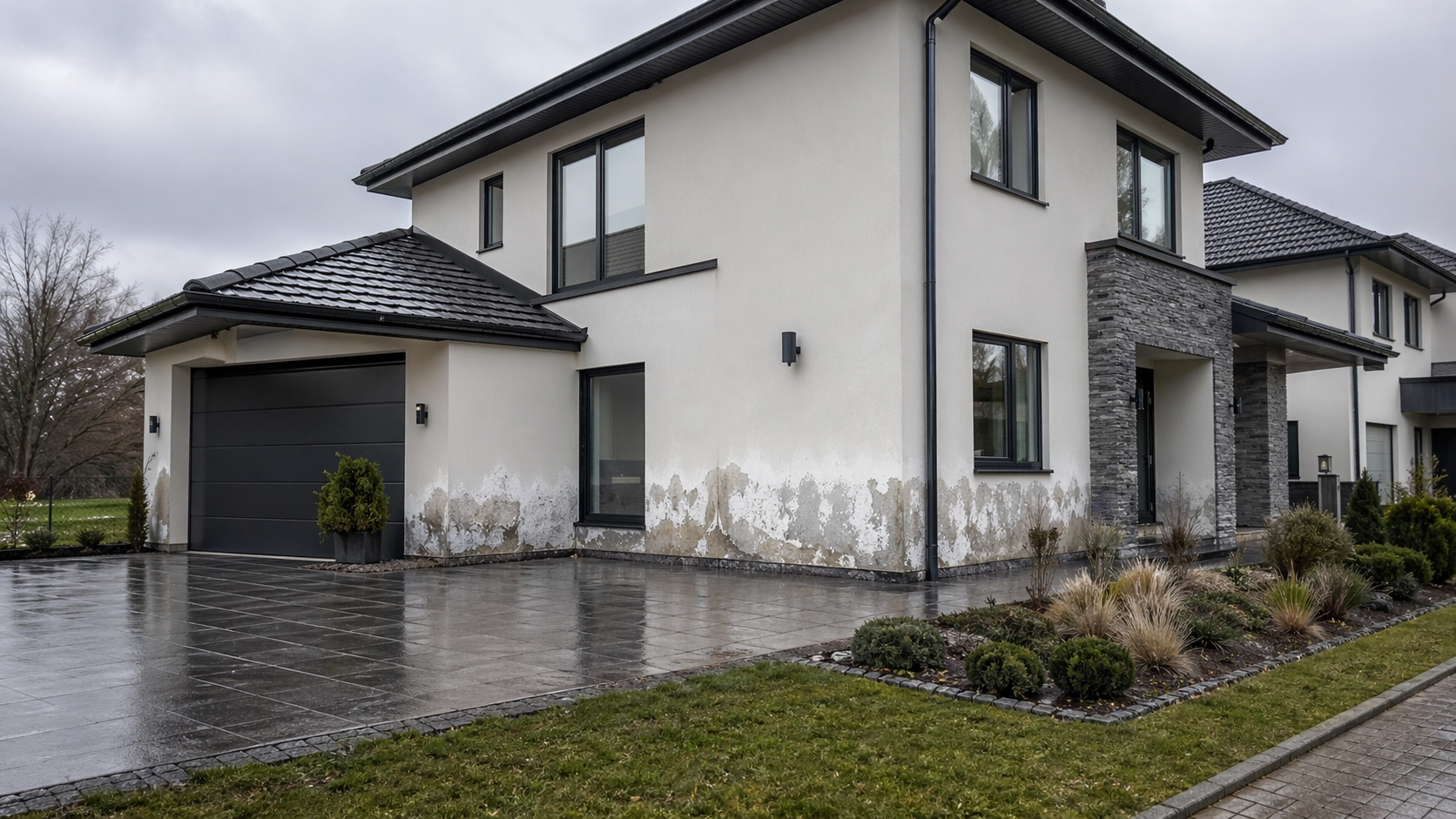
The issue of dampness, flawed renovation logic and the repeated compulsion to repair is not only a Hungarian characteristic. The same pattern can be seen in many European countries — Germany, Austria, Italy, Spain, the United Kingdom — and is equally present in other parts of the world.
Because the problem originates from the same source everywhere: a significant proportion of buildings are constructed on moisture-laden structures, while the renovation market continues to focus primarily on surface-level solutions.
The world today talks about energy-efficiency retrofits. Thermal insulation. Green buildings. Lower energy consumption. More sustainable cities.
Yet there is one fundamental issue that is too often left out of the equation:
A damp wall insulates poorly, conducts heat faster, reduces indoor comfort, increases heating and cooling energy demand — and at the same time promotes mould growth, salt efflorescence and structural damage.
This is why, in the coming years, it will be particularly important that renovation does not begin with what we apply to the outside of the wall — but with bringing the structure itself into the right condition from the inside.
No matter how much new thermal insulation, new plaster, new coating or new cladding is applied, if the moisture inside the wall continues to work, the efficiency of the investment declines, the service life shortens, the repair cycle restarts, and in a few years the same problem returns — only on a larger surface area and at a higher cost.
In Europe this is an especially pressing issue because of energy-efficiency targets. However, the problem does not stop at the EU borders. It affects the United States, the Middle East, Asia, coastal cities, humid climate regions, flood-prone areas, and every country where the building stock is ageing, climate stress is increasing and maintenance costs continue to rise.
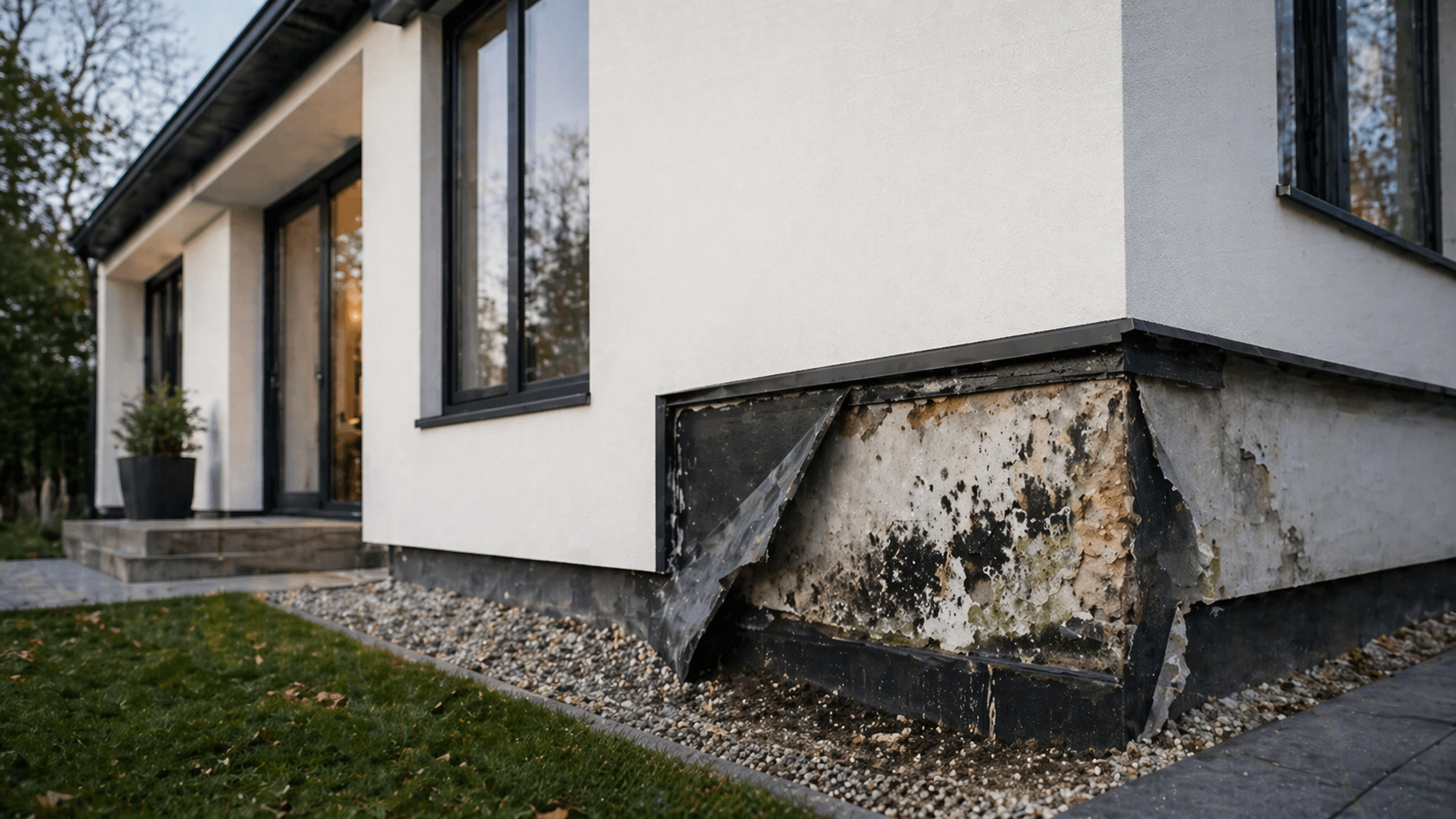
And this is where it also becomes clear that genuine green construction does not begin with the outer layer of the wall — it begins inside the structure itself.