
Cart
0
£0.00
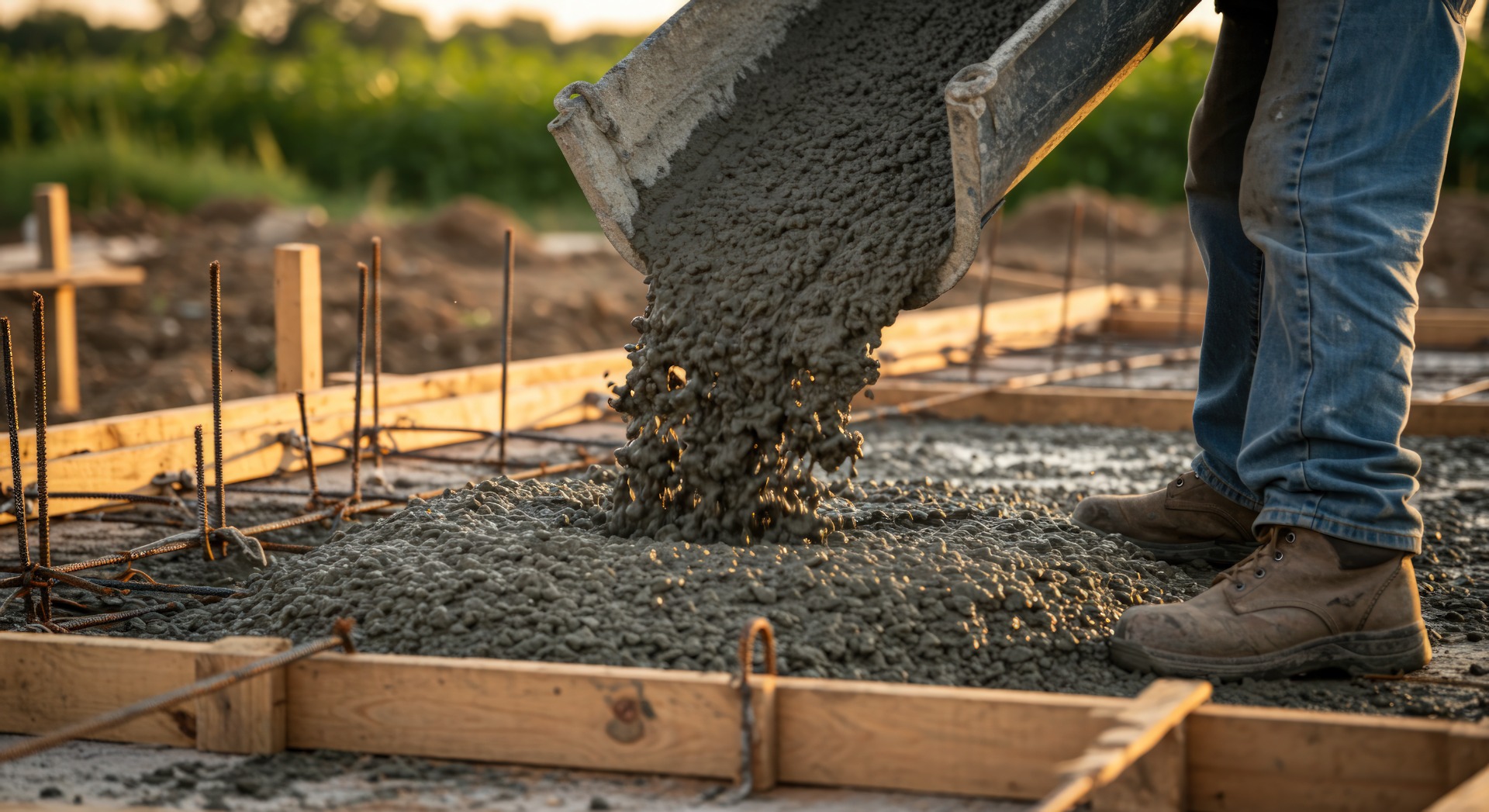
Bituminous membranes, polymer coatings and sheet membranes create an external protective interface on the surface of the concrete and try to keep water away from the outside. Their effectiveness depends fundamentally on the continuity, adhesion and ageing resistance of the surface layer.
If such a coating is damaged, cracks, is punctured or fails at the joints, water can get behind the waterproofing. From that point on, the internal capillary system of the concrete continues to conduct moisture, because the material structure itself has remained unchanged.
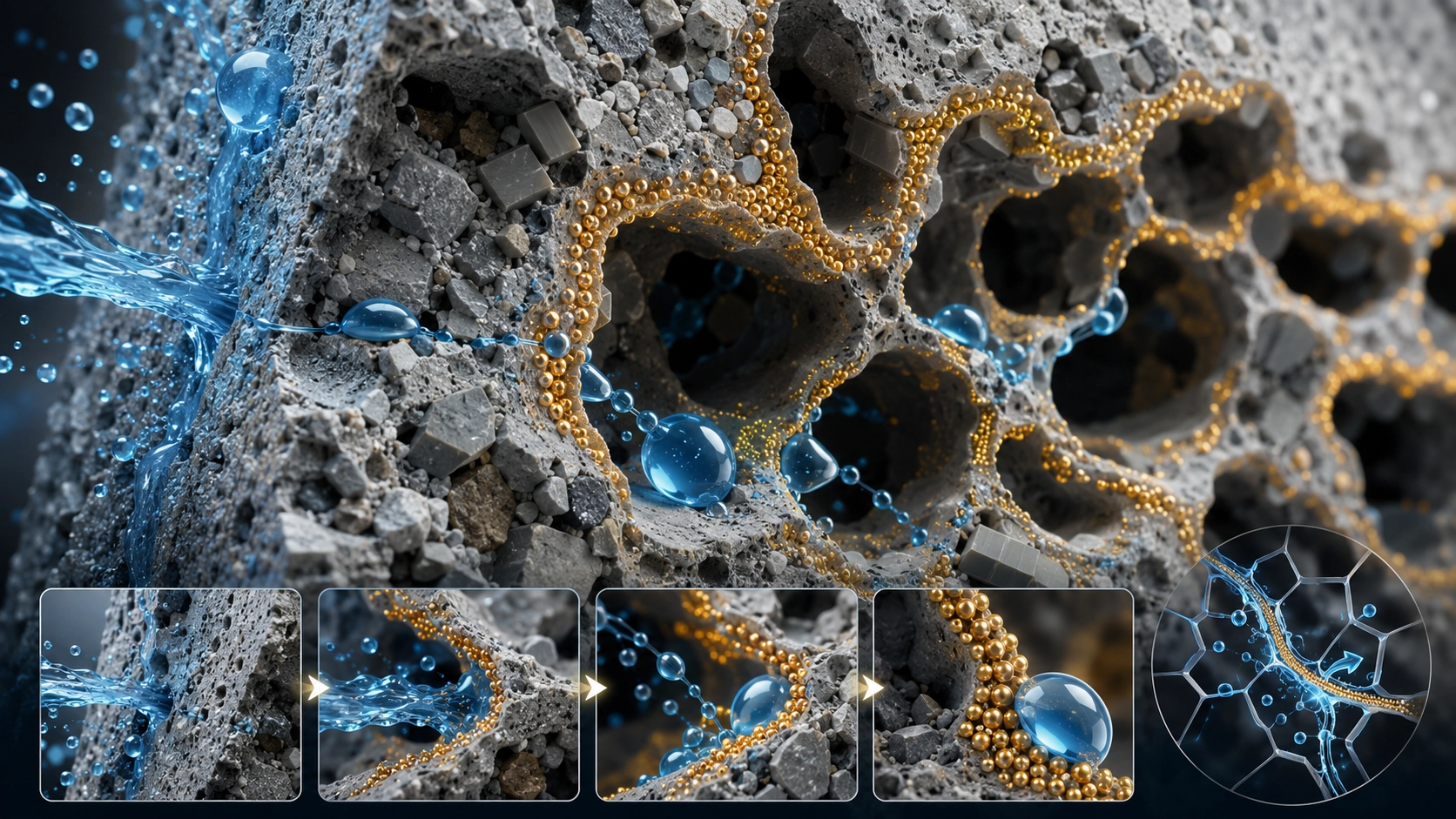
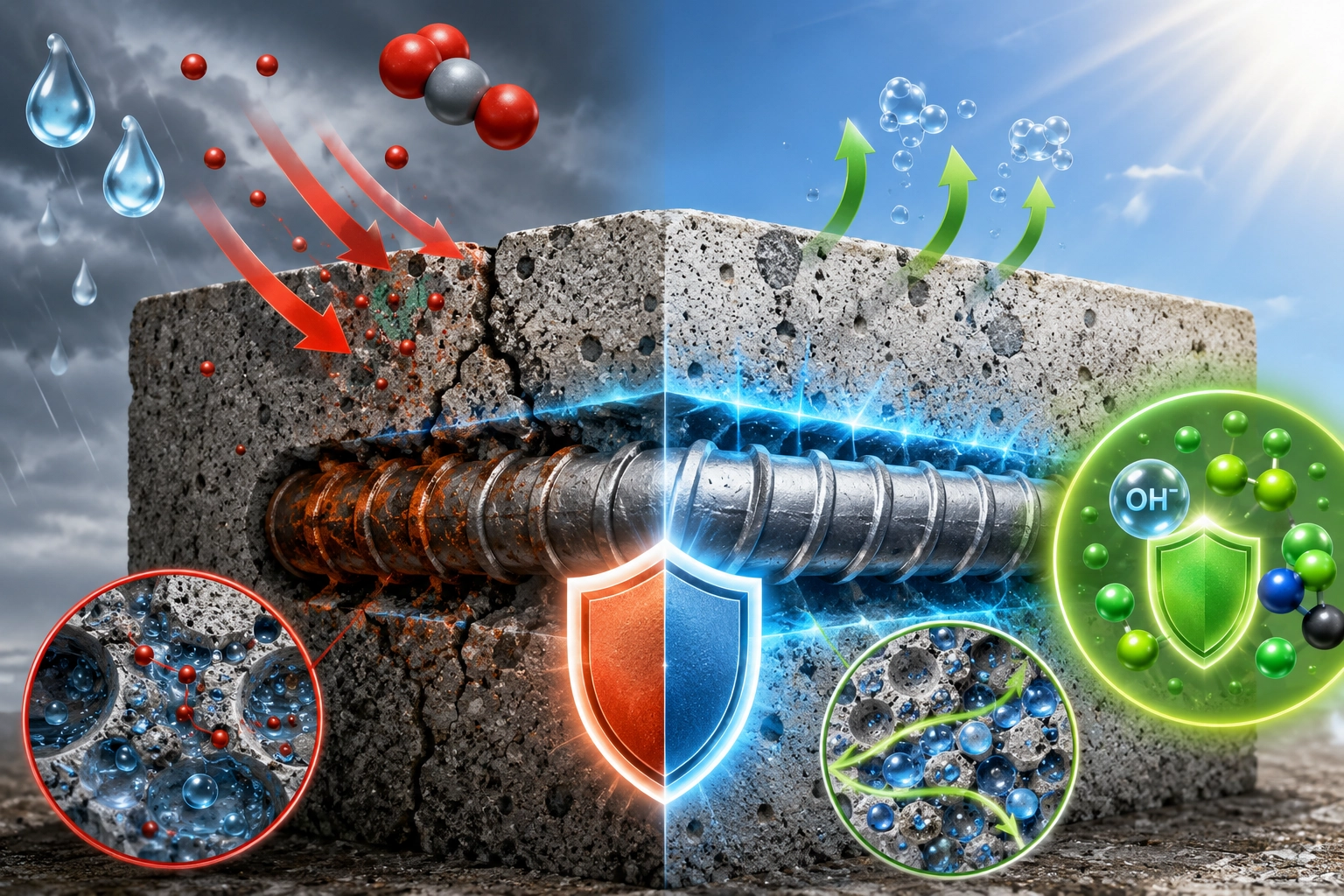
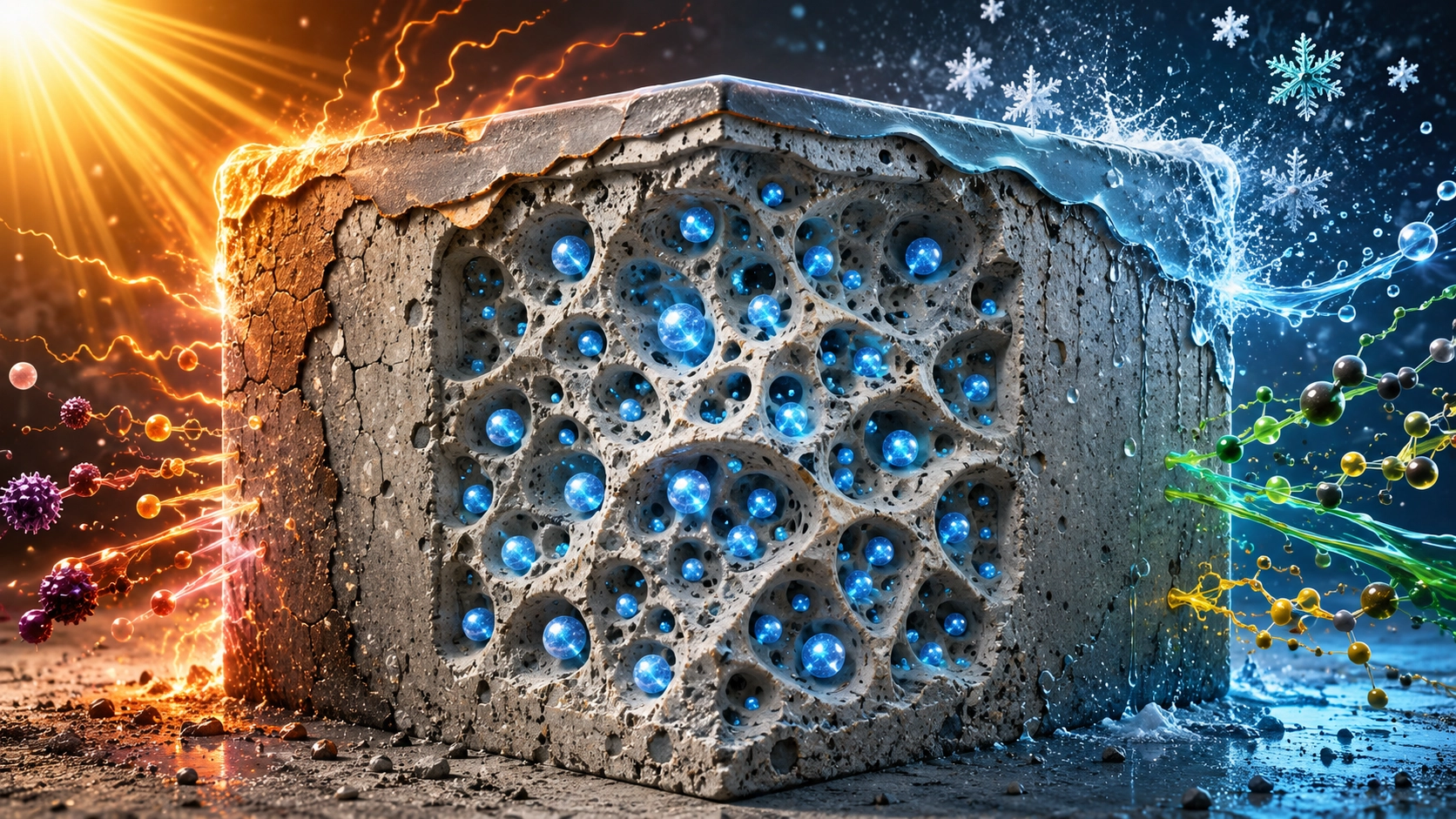
Protector SG-55 reverses this logic. The protection is not carried by a separate layer; the modified pore system itself becomes the basis of watertight performance: the concrete does not receive a vulnerable protective layer from the outside, but becomes - from within - a material structure that is more resistant to water, frost and corrosion risks.

| Property | Organic surface waterproofing | Protector SG-55 / ExoBase™ |
|---|---|---|
| Material family | Bitumen, polymer, acrylic, polyurethane, epoxy | Calcium oxide-based mineral carrier with functional surface treatment |
| Place of action | On the external surface of the concrete | In the internal pore and void system of the concrete |
| Service life limit | Ageing, cracking and delamination of the surface layer | Not tied to an external layer; the particles are anchored in the concrete matrix |
| UV sensitivity | Can be significant on external surfaces | Not decisive - the active component works inside the concrete |
| Thermal cycling | Fatigue, cracking, loss of adhesion | Does not act as a membrane; cyclic surface stresses are less relevant |
| Maintenance logic | Periodic inspection, repair or renewal | Part of the material structure; requires no separate surface-layer maintenance |






| Crack type | Expected behaviour |
|---|---|
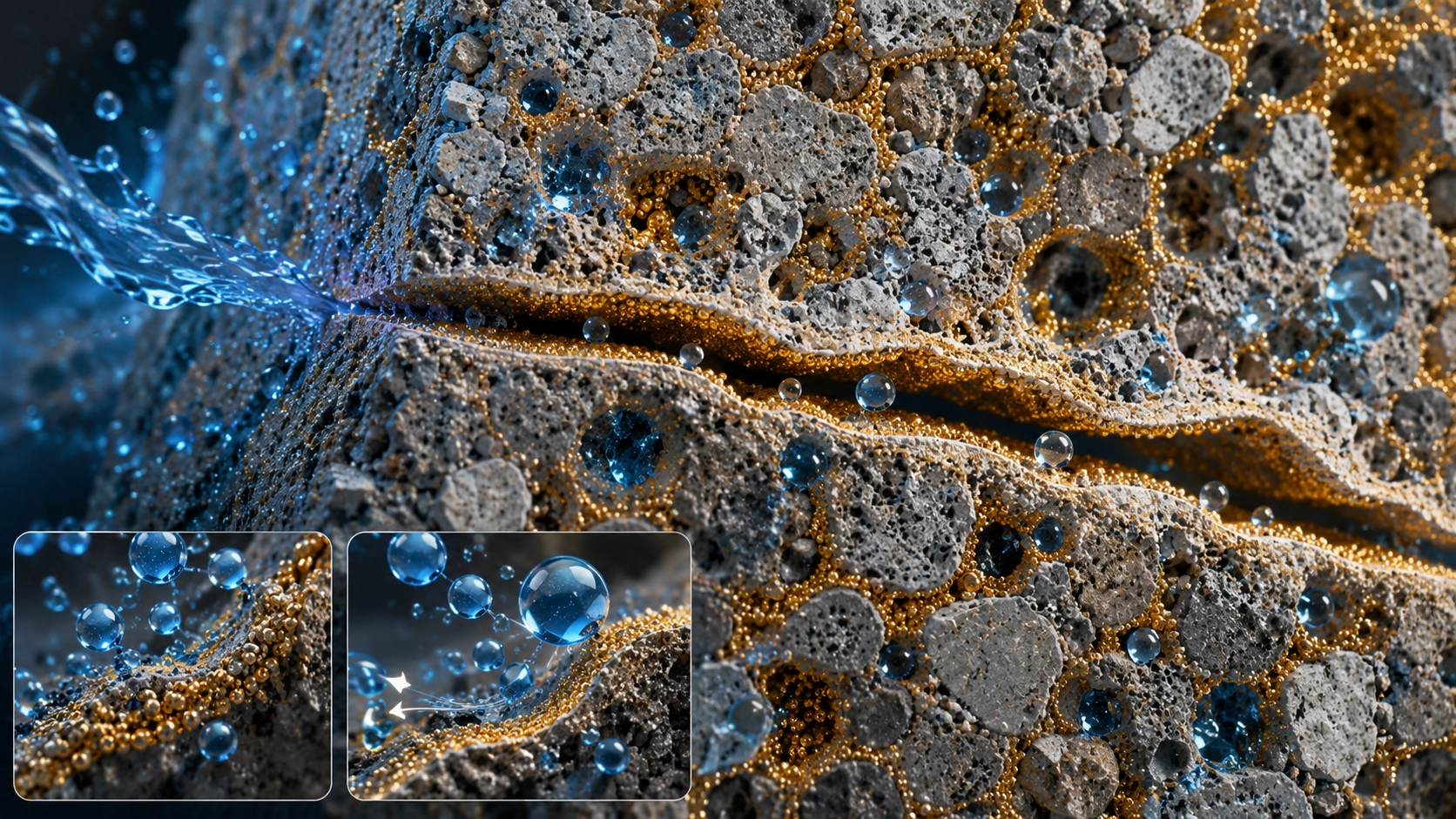
| Microcrack ≤ 0.3 mm | The hydrophobic surface character also applies to the freshly exposed crack surfaces. The conditions for capillary water ingress are significantly restricted. |
| Wider crack 0.3–1.0 mm | The modified surface condition is still present, but under hydrostatic pressure, and depending on crack geometry and sustained water load, water can pass through mechanically. |
| Structural macrocrack | Conventional structural crack repair is required. Protector SG-55 does not replace the repair of structural or load-bearing defects. |
Physical formUltra-fine, off-white mineral powder, dosed into the dry mix during concrete production.
Particle sizeApprox. 4 µm - a micropore-filling size that supports distribution within the capillary channels and the interfacial transition zones.
Bulk density0.65 kg/dm³ - a light, highly active powder with a large functional surface area relative to its mass.
Specific surface area (BET)Large reactive internal surface. The exact value for a given production batch can be certified on a certificate of analysis (CoA).
pH value11.5-12.5 - strongly alkaline character, supporting a pore environment favourable to the passivation of reinforcing steel.
Surface chargePositive. This ensures uniform dispersion without agglomeration, and strong adhesion to hardened cement paste, sand, ballast and gravel.
Chemical characterMineral, solvent-free, VOC-free powder - compatible with LEED / BREEAM requirements and low-emission specifications.
Integrated material effectThe active component is distributed within the concrete matrix; its performance does not depend on the adhesion, UV resistance or ageing of an exposed membrane.
Structures exposed to ground moisture and hydrostatic load, where the external surface is inaccessible after construction.
Load-bearing concrete exposed to precipitation, de-icing salts, freeze–thaw cycles and sustained moisture loads.
Reinforced concrete structures simultaneously affected by water, salts, temperature fluctuation and corrosion risk.
Precast hydraulic engineering elements and industrial elements of lower concrete class, under sustained water load.
Floors, shafts, channels and structural elements where long-term moisture resistance is critical.
The dosage should not be matched to the cement mass alone, but primarily to the fines content of the concrete. The 0–4 mm fraction is particularly important, and within it the proportion of the < 0.125 mm range, since this determines the size of the internal surface to be covered by the active component.
The higher the proportion of fines, the greater the internal specific surface area of the concrete, and therefore the greater the quantity of active component required. The values below are initial engineering guide values.
| Concrete class | Coarser / Danube-type | Medium grading curve | Finer / Maros-type |
|---|---|---|---|
| C12/15 – C16/20 | 5–6 kg/m³ | 6–8 kg/m³ | 8–10 kg/m³ |
| C20/25 – C25/30 | 4–5 kg/m³ | 5–6 kg/m³ | 6–8 kg/m³ |
| C30/37 | 3–4 kg/m³ | 4–5 kg/m³ | 5–6 kg/m³ |
| C35/45 | 2.5–3.5 kg/m³ | 3–4 kg/m³ | 4–5 kg/m³ |
How does it differ from crystalline admixtures?With crystalline systems, the aim is for new crystalline phases to grow in the presence of water and partly seal the crack or the capillary channels. Protector SG-55 is not based on subsequent crystal growth: the ExoBase™ particles are already present throughout the entire volume of the concrete, so when a crack opens, no new protection has to form - the already modified material structure is what becomes exposed.
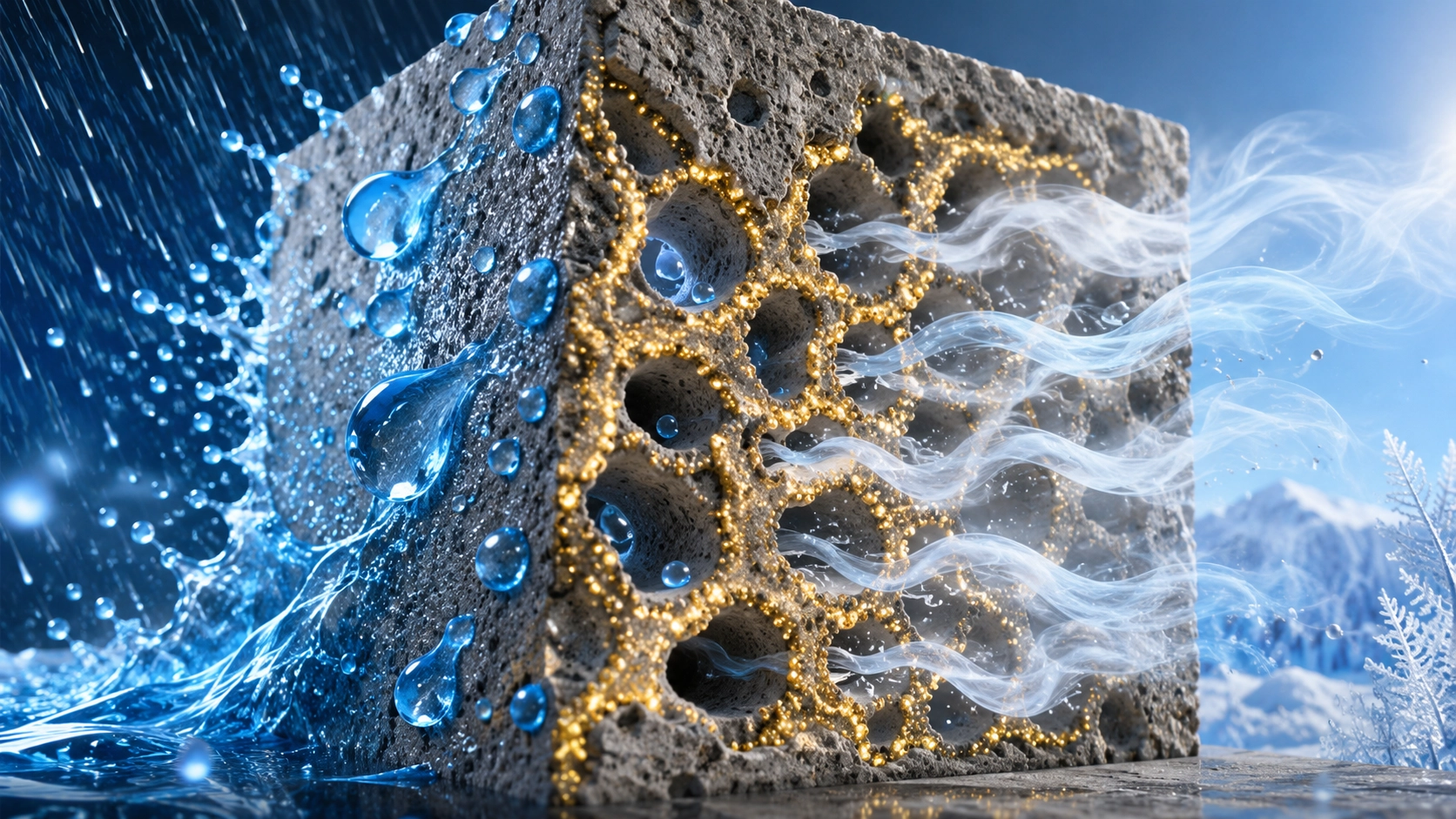
Does the concrete still breathe, or does it form a vapour barrier?It does not form a vapour barrier. The capillary movement of liquid water becomes restricted, while the diffusion of water vapour out of the structure is retained. This matters because moisture trapped in the structure can cause internal stress during freeze-thaw cycles and, in reinforced concrete, an unfavourable corrosive environment.
How long does the effect last?The protection is not based on an external coating system that ages over time. The active component is anchored within the internal material structure of the concrete, so the service life of the protective function is linked to that of the cement matrix and of the structure as a whole, not to the classical coating ageing curve.
How can the performance be verified on our own mix?The performance values depend on the concrete composition, so project mix validation is required. For load-bearing applications, higher concrete grades, and in every case where the project mix differs significantly from the reference range, accompanying laboratory testing is mandatory.
Exoline® Protector SG-55 addresses the most important durability risks of concrete within a single integrated material system: capillary water ingress, the water-conducting role of microcracks, freeze–thaw damage and the corrosion exposure of the reinforcement.
The protection is not tied to a vulnerable layer created on the external surface of the concrete; it is formed within the internal pore and void system of the concrete. The active component becomes part of the concrete together with the structure, and rather than sealing off the natural material behaviour of the concrete, it modifies that behaviour in a favourable direction.
Have Protector SG-55 tested on your own project mix.